
Weather station with rain gauge for farmers
As a farmer, you don’t make assumptions when it comes to rain. Every drop counts for your harvest, planning and soil management. With a weather station with rain gauge in your field, you have real-time data, accurate to the millimetre.

You not only measure how much rain falls, but also gain insight into temperature, humidity and wind. Digital thermometers with a hygrometer show trends, Wi-Fi weather stations forward notifications and link to apps and dashboards. For agricultural applications, a well-placed, well-calibrated weather station with rain gauge is not a gadget but an essential decision-making tool. These are not consumer weather stations, but a professional agricultural monitoring system.
In this article you will read what you need to know to choose a farm weather station with rain gauge that suits your farm. We cover all the key sensors, features, installation instructions, applications in farming practice or fruit growing, and maintenance. You get practical insights based on what really works in the field. This article was written for and by FieldGuard, with one goal: better decision-making with reliable weather data, without depending on third parties or general weather apps.
Why your own weather station with rain gauge?
- Local: measures exactly what happens in your field (rain, temp., RH) at crop height.
- Better planning: sharper control of irrigation, spraying and harvest timing.
- Fewer timing errors: prevent yield loss caused by general or outdated weather data.
- Independent: no longer relying on national stations or unreliable apps.
- Microclimate made visible: place several sensors for dry/cold/wet zones → precision farming.
- Preventive action: intervene faster with fungal risks and heat/drought stress.
- Return & sustainability: less waste of water and inputs, more efficient growing.
In short: a weather station with rain gauge in your own field = fact-based control, more control and better business results.
Why a weather station with rain gauge?
Many growers still rely on general weather information from the KNMI (the Dutch national weather service) or weather apps. But the weather is extremely variable locally. A shower falling ten kilometres away means nothing for your field. That is exactly why it is invaluable for a grower to have their own weather station with rain gauge on their own land.
With your own weather station with rain gauge, you work with hyperlocal data at crop height – exactly the values that determine irrigation, spraying and harvest planning. This helps you avoid poor timing, yield loss and unnecessary use of inputs. You also depend less on national stations or unreliable apps. With several measuring points you map the microclimate: dry zones, cold spots and wet areas. That makes preventive action possible and increases the resilience of your crop. A weather station on your own land is therefore not a luxury, but a strategic tool for better decisions and a higher return.

- When can I irrigate? Insight into current and cumulative rainfall per field, so you only irrigate when it is really needed.
- How many mm has really fallen in my field? Accurate rain measurement on site, instead of general weather data from kilometres away.
- Can I wait before spraying? Combine rainfall and weather data to determine the right spray timing and prevent wash-off.
- Is this relevant for scab or bacterial pressure? Rain and humidity data help you assess infection risks and intervene in a more targeted way.
Key sensors & readings
Temperature (digital thermometers)
Temperature affects growth, blossom and frost risk. Digital meters measure to an accuracy of 0.1 °C. With min/max tracking you know when your crops are at risk.
Humidity (hygrometer)
Relative humidity is essential for fungal development and dew point analysis. A good hygrometer is indispensable when planning crop protection.
Air pressure (barometer)
Falling air pressure predicts bad weather. Barometric trends help interpret rainfall patterns and storm risks.
Wind (anemometer & wind direction)
Wind speed and direction are important for crop protection, fertilising and irrigation planning.
Rainfall (rain gauge)
The rain gauge is the heart of the system. Accurate recording per hour or per day enables trend analysis and helps with planning fertilising, watering and field access.
UV light and light sensors
The UV index affects evaporation and photosynthesis. Light intensity helps optimise glasshouse growing or the timing of work.
Farm weather station with rain gauge
The FieldGuard farm weather station with rain gauge has been developed for farmers and growers who want to base their decisions on reliable measurements at field level. Not general weather data from kilometres away, but insight into what is actually happening on your land.
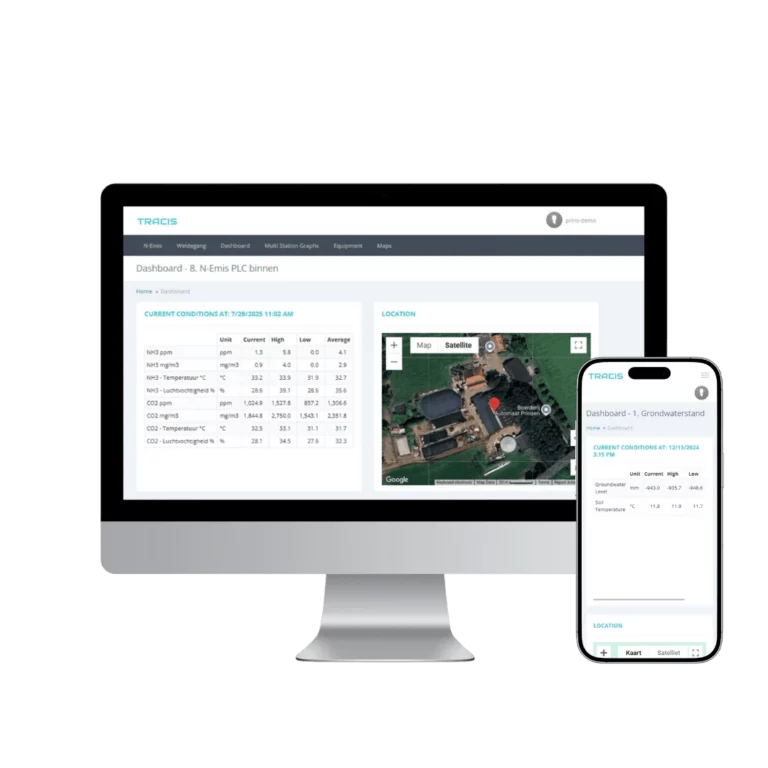
The integrated rain gauge accurately measures how much rain falls, when it falls and what this means for your crop. This data is combined with other weather measurements and clearly displayed in one user-friendly platform.
- 01
What does the weather station measure?
- Rainfall (mm) at field level
- Temperature and humidity
- Weather conditions that affect disease and fungal pressure
- Current and historical data for better comparison and planning
- 02
What can you do with it in practice?
With the rain gauge and weather data, you make well-founded decisions without guesswork:
- Better decide when to irrigate and avoid unnecessary water use
- Assess whether you can wait before spraying, to avoid wash-off
- Better assess disease risks such as scab or bacterial pressure
- Work with your own data instead of regional weather reports
- 03
Specially developed for agricultural use
This is not a consumer weather station, but a professional agricultural monitoring system:
- Measurements in your field, not at a weather station further away
- Designed for fruit growing, arable farming, glasshouses and polytunnels
- Data translated into practical insights, no complicated charts
The result: more control over your crops, less waste and decisions that fit day-to-day practice on the farm.
No standard package, but advice that fits
Weather differs by location. Sometimes even by field. General weather data or a station kilometres away says little about what actually happens on your land. That is why we do not supply an off-the-shelf weather station, but a weather station with rain gauge that suits your situation.
In some cases, a basic weather station with rain gauge is enough to reliably record rainfall, temperature and humidity. In other situations, a more extensive weather station is needed, with extra sensors to capture microclimate and local differences precisely.
Together, we determine:
- Which measurements are needed
- Whether a simple or extensive rain gauge is sufficient
- Where the weather station should be placed for reliable data
No sensors that add nothing. No overkill.
We also say no if an extensive weather station offers no extra value. That is part of it.
Request advice or a quote
Would you like to know what a weather station with rain gauge would deliver for your fields or locations? Get in touch. No sales pitch. No assumptions. Just a straightforward conversation.
You get:
- Honest advice
- A clear quote
- A weather station that does what it should
Request advice or a quote. Then you know exactly what is falling, what is happening, and you can act on local facts instead of general forecasts.
Tailored quote
Request a no-obligation quote or demo. We will get in touch as soon as possible and are happy to think along with you.
- info@fieldguard.net
- +31 543 472 334
- Vierde Broekdijk 1, 7122 JD Aalten
Request a quote
Leave your details and we will get in touch.
