
Frost forecasting and frost alerts
Every night frost period is crucial for fruit growing. Miss it by a fraction and you lose blossom, harvest and time. With a smart frost forecast and alarm you are not caught out, but prepared.
In this article you will learn what causes night frost, how to get reliable forecasts and which protection techniques work best for your crop. We cover the timing of the Ice Saints (a Dutch frost-risk period in mid-May), which sensors give the right signals, and practical methods such as irrigation, covering and windbreaks. You get a practical step-by-step guide, read about common mistakes – and know exactly what to do once night frost is over and you can take action. The focus is on directly applicable solutions for fruit growing, so you turn every frost period into a better yield and less risk.
What is night frost and what causes it?
Temperature differences and microclimate explained
Night frost occurs when the temperature just above the ground drops below zero, while the air temperature at 1.5 metres can still be positive. This often happens on clear nights without cloud cover or wind. In such conditions, heat radiates from the soil into the atmosphere without being held back by clouds or blown back by wind. This creates so-called frost pockets – places where cold air collects, often in low-lying areas or orchards. You can measure this with the frost alarm.
Why night frost occurs in spring and autumn
Night frost is particularly dangerous in spring (March to early May) and autumn (October to November). During the day the sun is already strong enough to make trees break bud or blossom, but at night frost can still occur suddenly. That makes young buds, blossom and fruit extremely vulnerable. Night frost in these periods can cost hundreds of kilos of yield per hectare.
Why is night frost a serious threat?
Impact on blossom, buds and young plants
In fruit growing, the first stages of blossom are crucial. Night frost can freeze and destroy cells in buds and flowers, causing them to turn black and die. A single frost night around blossom can ruin a whole year’s harvest. For crops such as apple, peach, cherry or blueberry, this risk is considerable.
Financial and ecological damage
A frost night without protection can lead to 30 to 90 per cent yield loss. That is not only an economic blow, but also affects contractual deliveries and market prices. In addition, failed blossom often leads to extra work, wasted water and nutrients, and sometimes extra treatments against secondary diseases that take advantage of damaged tissue. A result of not responding adequately to the frost alarm.
When does the night frost period end?
Climate patterns, the Ice Saints and local signals
The chance of night frost decreases sharply after the period of the Ice Saints, which runs from 11 to 15 May. Even so, this does not mean it is guaranteed to be safe afterwards. Regional differences and altitude play a big role. On sandy soils, in valleys or in open fields, it can still freeze in June. So do not monitor by calendar dates alone, but also by local weather trends and site conditions.
Measuring soil and air temperature
An effective way to know when night frost is really over is to track soil temperatures and night-time minimum values. When these stay consistently above 4 °C, the risk drops sharply. FieldGuard sensors can show you exactly how the temperature develops in your field. Combine this with long-term trends and weather forecasts for a reliable decision.
Methods for frost protection
Active methods: irrigation, fire pots, wind machines
Irrigating during a frost night sounds contradictory, but it protects effectively. The heat released when water freezes protects blossom from further cooling. Start sprinkling before the wet-bulb temperature reaches zero; if you wait until it is below zero, you are too late. The wet-bulb temperature must not drop below zero during the night, so keep sprinkling water continuously until it is well above zero again. Fire pots and candles create local heat, but are labour-intensive and harmful to the environment. Wind machines mix cold air near the ground with warmer air higher up, which is particularly effective against radiation frost.
Passive methods: covering, screens, site selection
Low tunnels or nets can protect young plants. Site selection at planting also makes a big difference: preferably do not plant in hollows or shady spots. Windbreaks and hedges can help limit cold air flows. Sensors and automation make it possible to activate measures in a targeted way and at the right moment.
Which sensors and equipment do you use?
Soil moisture sensors and temperature sensors
One of the most important tools is accurate temperature sensors at different heights: just above the ground, at crop height and at 1.5 metres for the air temperature. These give a clear picture of the frost potential. Soil moisture sensors are also valuable. Dry soil cools faster than moist soil, so soil moisture can increase the risk of night frost.
Weather stations and FieldGuard integration
A complete weather station with rain gauge, wind sensor, barometer and hygrometer gives you all the data you need. By linking these to FieldGuard’s software, you get real-time alerts via the frost alarm and automatic logging of critical values. Think of alarm systems for temperatures below 1 °C, so you can take immediate action at night.
How do you read and interpret frost alerts?
Understanding frost models and thresholds
Frost alerts are based on temperature models, dew point analysis and expected cloud and wind patterns. An alert is usually issued when the temperature falls below a critical threshold, for example 1 to 2 °C for blossom. It is important to understand that this threshold depends on the development stage of your crop. A young bud is more sensitive than a closed flower.
Local vs. regional alerts
Preferably use local measuring points such as your own FieldGuard station with frost alarm. Regional alerts, such as those from the KNMI (the Dutch national weather service), give a rough estimate. Combining both gives you a more realistic picture.FieldGuard software can link alerts to your own critical zones, so you are not dependent on generic forecasts but work at field level.
Wet-bulb temperature and dew point: the values behind a good frost alert
A reliable frost alert does not only look at the air temperature. In dry air, blossom and buds cool further than the air through evaporation. That is why a frost alarm is preferably based on the wet-bulb temperature. If the dew point is low, the air is dry and the temperature can drop quickly on a clear, windless night. For the outlook over the coming days, combine your own measurements with an agricultural weather forecast.
No standard package, but advice that fits
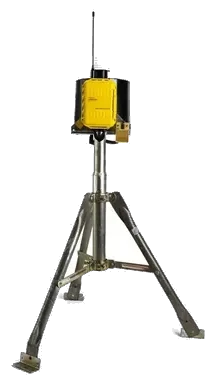
Night frost is local. A few tenths of a degree make the difference between damage and nothing. General weather forecasts are too coarse for that. That is why we do not supply a fixed frost alarm station, but a system that suits your field and crop.
Sometimes one measuring point is enough to identify risks in time. In other situations, several sensors are needed, at different heights or locations, to get a good picture of cold air flows and temperature differences. Especially in orchards, hollows or sheltered fields.

Together, we determine:
- Where and at what height to measure
- When an alarm should go off
- Whether one station is enough or several are needed
No unnecessary sensors. No false alarms due to incorrect placement.
We also say no if an extensive system does not add any extra certainty. That is part of it.
Request advice or a quote
Would you like to know what a frost alarm station would deliver in your situation? Get in touch. No sales pitch. No assumptions. Just a straightforward conversation.
You get:
- Honest advice
- A clear quote
- A reliable alarm system that does what it should
Request advice or a quote. Then you know in time where you stand and can act before frost causes damage.
Tailored quote
Request a no-obligation quote or demo. We will get in touch as soon as possible and are happy to think along with you.
- info@fieldguard.net
- +31 543 472 334
- Vierde Broekdijk 1, 7122 JD Aalten
Request a quote
Leave your details and we will get in touch.
